Why Intervention Keeps Failing: A Diagnosis of State Failure
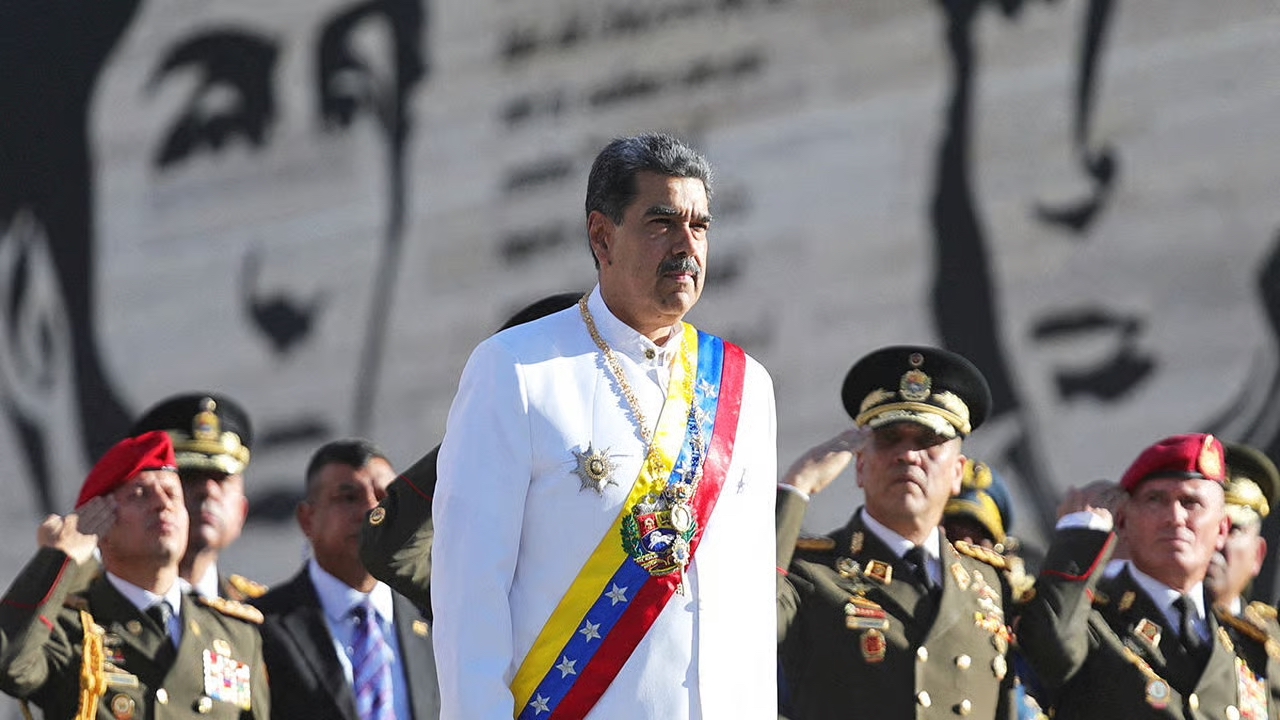
I’m not even sure what to call the recent capture of Maduro in Venezuela, an invasion, a kidnapping, a coup, nation-building? As I write this, Iran is on the verge of collapse, and Trump is debating whether to intervene. The consensus among my friends is that intervention is a bad idea, especially if it’s led by the US. The track record backs them up. But here’s the problem: I was born and raised in Japan, where American intervention worked spectacularly well. And yet Japan barely comes up in the modern argument. We keep circling the failures, as if success never happened.
I also have a morbid fascination with North Korea. I’ve watched countless hours of videos about it, partly because I have a fear of being trapped (cleithrophobia). I daydream about freeing North Koreans. If I were North Korean, I’d probably be dreaming about Americans coming to rescue me. Venezuela isn’t North Korea, but when I read what Maduro has done, I still wish we could do something for ordinary Venezuelans.
I don’t think I’m alone in this. Liberal-minded people, in particular, often get stuck: they want to reduce suffering, but they don’t trust their own country to wield power responsibly. They watch Venezuelans celebrate in the streets while also assuming the rebuilding will be botched, the backlash will be real, and the country will slide again.
So the questions I want to ask are simple:
- Why did intervention work so well in Japan?
- Can that kind of success be repeated, or should we give up on the idea?
American Success in Japan
After Japan’s unconditional surrender, there were no major internal divisions that derailed recovery. The US set the direction, and most people moved in sync. It was as if Japan accepted defeat and started playing a different game entirely, like switching from poker to chess.
In many other US interventions, the opposite happens. The moment the old order weakens, internal conflicts rush into the vacuum. Progress bogs down, factions fight for advantage, and the situation can slide into civil war. Even temporary local breakdowns of authority often trigger looting and violence.
In contrast, it’s hard to imagine large-scale looting in Japan even if the government collapsed. In emergencies, the opposite often happens: people queue, share, and help each other.
We can frame this difference as internalized versus externalized order, meaning where order “lives.” If people behave well only when police or authorities are visibly present, order is externalized; remove the enforcer and chaos follows. If restraint lives inside individuals, order is more distributed, and the system has no single point of failure. Japan is closer to that end of the spectrum.
None of this is a novel observation. The problem is that talking about it can sound like victim-blaming. But what if it’s simply true? The US is powerful enough to absorb being cast as the villain; Americans can apologize and move on. People living inside the failed intervention can’t. Take Afghanistan: once US forces left, the system collapsed and relapsed into dictatorship. It is easy, and often emotionally satisfying, to blame the outsider. But if their own dysfunction is also a contributing factor, then blame can become a way of not seeing the hard parts that would have to change. In that sense, moral framing can distort what we observe and obscure viable solutions.
Don’t get me wrong. I’m not saying “blame the victims,” and I’m not saying nobody is responsible. We can name constraints without turning them into condemnation. And the opposite is also true: Japan’s success doesn’t mean Japan gets to take full credit. The same cohesion that helped Japan recover quickly also has an ugly side. In wartime, that coordination can become groupthink: fewer people ask “Wait, why are we doing this?” and more people simply align with the collective project, even when it is catastrophic.
There are a few theories to explain this behavior. One is called the “rice hypothesis.” It is a cultural theory that argues that wet-rice agriculture historically required unusually high levels of coordination, including shared irrigation systems, synchronized planting and harvesting, and constant collective labor. Over many generations, the argument goes, societies shaped by rice cultivation developed stronger norms of interdependence: attentiveness to others, conformity, harmony-seeking, and a willingness to subordinate individual preferences to group needs.
Supporters of the hypothesis often point to a within-country correlation in China: historically rice-growing regions in the south tend to score as more interdependent (more “holistic” thinking and stronger norm sensitivity), while historically wheat-growing regions in the north tend to score as more individualistic (more “analytic” thinking and greater tolerance for standing apart). This is not a clean causal proof (there are obvious confounds like geography, climate, migration, and political history), but it offers a concrete way to see the pattern without comparing entirely different nations.
Another theory emphasizes the geography of an isolated island nation. An ocean border functions like a moat: contact is channeled through ports and chokepoints rather than leaking across long land frontiers, and external shocks are easier to buffer or delay. The point is not that Japan lacked outside influence (especially from China), but that the terms of influence were often more controllable, and that changes could be selected, translated, paced, and integrated into a coherent idea of self. Influence that is chosen and domesticated tends to reinforce cohesion; influence that is imposed tends to feel like humiliation and threat, trigger backlash, and split people over legitimacy. Either way, strong cohesion can be a double-edged sword: it enables fast coordination, but can also produce groupthink, narrowing dissent and weakening outward-facing strategic imagination when the group commits to a course of action that ought to be questioned.
In other words, Japan’s cohesion is less an achievement than a historical inheritance: a path-dependent product of geography, institutions, and long-run coordination pressures that no single generation “designed.” You can call that luck, contingency, or circumstance, but the practical implication is the same: moral score-keeping (“they earned it” / “it’s their own fault”) is a distraction. The question is how to recognize these underlying conditions without turning them into either praise or blame, and what, if anything, can actually change them. Analyzing foreign policies based on victim-vs-victimizer distorts what we could otherwise achieve.
What matters for Japan is that the occupation did not “work” because the Americans discovered the right institutional design. A more plausible mechanism is that it worked because Japan already had unusually strong internalized order, and because defeat produced a rapid, society-wide legitimacy shift: many people were willing to treat the new order as their own cause, rather than as a temporary script imposed by a rival faction or a foreign occupier. Once that ownership/legitimacy is present, the incentives change: following rules stops being something you do only under threat, and “doing the least you can get away with” stops being the rational default. A subtle example is public bathrooms in Japan: they stay clean because each person keeps them clean for others, even though they could easily get away with not doing so. That’s what it looks like when order is internalized in individuals, when rules are experienced as shared, not as obstacles to minimize.
Fascism in All of Us
In a society where order is externalized, where rules are treated as external demands, the opposite incentive structure emerges: evasion and low-trust bargaining become rational, and the same institutional blueprint tends to remain hollow. This is why focusing on what structure to impose (what constitution to write, what institutions to build, what leader to install) misses the point: those are effects that reflect the population’s internalized order (or lack of it). Designing intervention from the top down is working backward. The real question is what structure is internalized in individuals, and how it can be rebuilt from the bottom up. When people cannot rely on distributed self-restraint, they naturally demand centralized restraint; authoritarian leaders are not only imposed from above, but also selected from below. Fascism, in this sense, does not come from the top alone, it is a political form that emerges when enough people want order without trusting one another to sustain it.
This pull toward external authority isn’t some exotic defect in “other” countries. It’s in everyone, including Americans. When life feels dangerous and uncertain for long enough, people get impatient with slow processes and start wanting someone, anyone, with the power to cut through the mess and make things stable. After September 11, many Americans accepted sweeping surveillance and a stronger executive because it felt safer. In calmer times the same impulse shows up in softer ways: when politics feels stuck, people cheer for rich or powerful outsiders to step in and “just fix it.” When Bill Gates pledged large sums to support gun-control initiatives, part of the appeal wasn’t that his power was legitimate; it was the temptation to let his raw power of money override the messy democratic process. The longer a society lives in insecurity and chaos, the more it starts craving a strong hand. People begin implicitly asking for authoritarianism. This is the start of the vicious circle; once started, it is hard to change direction.
None of this implies that “more cohesion is always better.” Cohesion is a condition, not a virtue. Too little cohesion and a democracy can’t function at all. But too much cohesion can slide into conformity and groupthink. The US is a useful reminder of the middle range: it is diverse in background and belief, yet (at least at its best moments) cohesive enough for democratic rules to be accepted as real constraints. In other words, democracy has a minimum cohesion requirement, but it also needs enough pluralism for dissent to remain legitimate.
Russia and China illustrate a different point on the spectrum. They can be cohesive and stable for long periods, and that stability is not imaginary: they maintain territorial control, deliver economic growth, and allow many citizens to live materially decent lives with limited day-to-day friction. But the stability is heavily externalized: order is maintained through hierarchy, surveillance, and fear of sanction rather than through widely internalized self-restraint. The tradeoff is brittleness. If the center weakens through succession crisis, legitimacy shock, or economic rupture, there is less practice of voluntary coordination and norm enforcement to fall back on. Over time, a system like this can also discourage civic adulthood: people learn that the safest strategy is compliance and private adaptation, not taking responsibility for building and maintaining public order. Gradually, the very capacities that make voluntary order possible atrophy.
Functional Independence
The core problem is not moral failure or cultural pathology. It is the loss of functional independence: the inability to sustain coordination, restraint, and self-maintenance under stress without external scaffolding. Modern welfare systems provide a clear and familiar illustration. Welfare is designed to help people after failure (job loss, illness, economic shock) without moral judgment. For individuals with intact internalized order, such support is stabilizing. Temporary assistance allows a natural return to independence. For others, however, the same assistance can become addictive.
This asymmetry is not a failure of compassion; it is a design problem. Welfare systems must operate without precise knowledge of who has temporarily lost capacity and who has chronically lost it. As a result, the same intervention produces radically different trajectories. Assistance that substitutes for internalized order rather than rebuilding it can stabilize failure instead of resolving it.
Addiction illustrates the same structure more starkly. Modern addiction science abandoned moral explanations without abandoning responsibility. Addiction is now understood as partly genetic, partly environmental, and strongly path-dependent. Unequal starting conditions matter. Yet recovery still requires recognition and acceptance of the problem. Crucially, recovery does not require resolving the original cause. Trauma or injustice may explain how addiction began, but dwelling on causes does not produce sobriety. Recovery begins when the dysfunction is acknowledged as real and internal, regardless of origin.
To be clear, it should not be read as implying that failing states are “addicted” in a clinical or moral sense. Like homelessness or long-term welfare dependence, state failure arises through multiple pathways. What these conditions share is not pathology, but dependence without a mechanism for restoring independence. They are learned responses to long-running material conditions. Some societies like Japan enter modernity with high baseline independence; others inherit chronic dependence. Expecting spontaneous self-correction under these conditions is as unrealistic as expecting a chronically homeless population to recover without intervention.
Regional Case Studies
In the Middle East, borders were deliberately engineered by colonial powers to ensure permanent internal conflict among different religious groups, making unity and cohesion extraordinarily difficult. But they do not fully explain why conflicts escalate so rapidly nor why coordination repeatedly collapses when the power structure collapses. Weak internalized order means that restraint, loss tolerance, and norm enforcement do not hold once authority weakens. Religion shapes the surface of conflict; the absence of internalized order determines its depth and destructiveness.
In Latin America, religious homogeneity is high, linguistic unity is widespread, and national borders are relatively stable. Yet similar patterns of dysfunction persist. The fragmentation cannot plausibly be attributed to sectarian division or border design. Instead, the absence of internalized order is exposed directly. Conflict escalates not because groups differ irreconcilably, but because restraint collapses once it is tested. In other words, homogeneity and secularism are insufficient for stability; internalized order is a separate and necessary capacity.
Across much of Africa, state failure has been deep, prolonged, and repeatedly catastrophic. What distinguishes Africa is the way collapse has been cushioned. Humanitarian aid, NGOs, peacekeeping missions, and donor institutions have absorbed the consequences of failure without restoring internal capacity. NGOs frequently provide core state functions (healthcare, education, food distribution, logistics) effectively substituting for the state itself.
This substitution prevents both full collapse and genuine rehabilitation. Elites externalize responsibility, citizens are never required to exercise collective restraint. Hitting bottom, under these conditions, does not trigger recovery; it produces adaptation to dysfunction.
Non‑Intervention As Abandonment
Non‑intervention is often framed as respect for sovereignty, humility about external power, or capacity for self-criticism. In practice, it frequently amounts to abandonment disguised as moral restraint. By focusing exclusively on external causes (colonialism, sanctions, global inequality), it allows internal dysfunction to remain unaddressed. The so-called “white guilt” plays a role in this.
This dynamic is reinforced when external observers, particularly in liberal democracies, accommodate grievance narratives out of guilt or fear of victim‑blaming. The result is a perverse moral equilibrium: external actors retain their ethical self‑image, domestic elites avoid accountability, and populations remain trapped in dysfunction.
By treating religious difference or colonial history as sufficient explanations, non‑interventionists implicitly assume that once these surface conditions are removed, self‑correction will follow. The regional cases above demonstrate why this assumption fails. Internal order is not a byproduct of homogeneity, secularism, or suffering; it is a capacity that must be built. Refusing to intervene on that capacity is not neutrality. It is abandonment.
A more relatable way to think about foreign intervention is through the lens of families or couples locked in long-running conflict. Most people understand how difficult it is to resolve deep grievances in a marriage or long-term relationship. Simply telling the parties to “move on” or “work it out themselves” rarely helps; without a mediator, the conflict tends to recycle rather than resolve. In reality, many failing states resemble families or couples locked in long-running conflict. Grievances accumulate, trust erodes, and every action is interpreted through the memory of past injury.
Force Is a Necessary Evil for Intervention
Pacifism, as idealistic as it sounds, is often misunderstood. Figures like Mahatma Gandhi are frequently invoked as proof that force is unnecessary. A more careful reading suggests the opposite. Gandhi’s strategy worked not because force disappeared, but because it was constrained and held in reserve by a powerful third party. The British Empire could not allow violence in India to spiral without severe reputational and political costs at home and abroad. Global scrutiny, the Western gaze, functioned as an external referee.
Postwar Japan’s pacifist constitution is often treated as a moral achievement in isolation. In reality, it has been viable only because of the long-standing security guarantee provided by the US. Japan’s renunciation of force rests on the credible presence of external force. Remove that guarantee, and the political meaning of pacifism would change overnight.
These cases do not undermine nonviolence; they explain its preconditions. Force still matters, whether we like it or not. This is also where many well‑intentioned liberal responses go wrong. Faced with the ugliness of force, they retreat into moral purification, rather than grappling with how it can be bounded and used pragmatically. The result is a posture that feels clean but leaves no workable path forward.
A Provisional Proposal
What I want to do in this essay is diagnose the problem differently, because it is obvious to me that the solutions available today aren’t working. The reason I suspect is a misdiagnosis. Once the diagnosis improves, people with direct experience will almost certainly come up with better and more workable solutions than anything I can offer here. But, in my own naive way, I want to provide a demonstration of how a different diagnosis can lead to a different solution.
At the simplest level, my idea treats state failure the way we already treat loss of independence in other areas of life. The goal is not to run the country from the outside, but to apply enough external pressure to break denial and secure consent to a structured recovery process, a temporary framework that people agree to because the alternative is worse.
That framework would be limited in time and scope. Rules, milestones, and exit conditions would be spelled out in advance so that no outside power governs by improvisation or moral discretion. Authority would sit in the process itself, not in the hands of whoever is providing support.
We already accept arrangements like this in narrow forms. International Monetary Fund programs, for example, show that countries can consent to strict conditions when the crisis is real enough. Governments apply, terms are negotiated up front, support is released in stages, and the program ends when agreed targets are met. The main problem with these programs is not that they are contractual, but that they focus almost entirely on economic indicators while ignoring whether a society is actually rebuilding the capacity to govern itself.
A rehabilitation‑oriented approach would focus on that missing piece. External help would be designed to shrink over time, not linger indefinitely. The test of success would not be how well a government performs while being watched, but how it behaves once oversight is reduced.
Incentives would be openly acknowledged. Countries offering these programs would expect political or economic benefits, and participating states would accept real costs for failure. Making interests explicit reduces hypocrisy and gives both sides a stake in eventual independence.
There would also be no single universal program. Different advanced economies embody different ideas about order, authority, and social organization. Allowing multiple rehabilitation frameworks would preserve choice, prevent moral monopolies, and let results, not rhetoric, decide which approaches work.
Finally, withdrawal would not mean abandonment. A short transition period of peer monitoring, under neutral arbitration, could help detect early backsliding without re‑imposing hierarchy. In this sense, the arrangement would resemble the sponsor relationship in 12‑step programs: not an authority that governs or punishes, but a nearby, accountable presence that notices warning signs early and intervenes before relapse becomes catastrophic. The point would be to catch problems early, not to police indefinitely.
Any contractual rehabilitation framework would also require a neutral way to handle disputes, and this is the right place to be concrete. What is needed is not a new moral authority, but a narrowly defined procedural referee. Institutions like the United Nations already perform this role imperfectly but recognizably: certifying agreements, providing arbitration, and triggering predefined consequences when terms are violated. In this model, such institutions would not govern outcomes or impose values. Their function would be limited to enforcing the rules the parties have already accepted. Moral governance is unnecessary and, in this context, counterproductive.
Raising the Bottom
Desperation is not a fixed point. When people feel they have no credible way out, they tolerate conditions that would otherwise be unacceptable. They endure humiliation, cling to denial, or accept increasingly coercive forms of authority simply because no alternative is visible. In such situations, accepting external help feels like surrender rather than recovery, and surrender is postponed for as long as possible.
The availability of credible, bounded recovery paths changes this calculation. When people know that accepting help does not mean permanent loss of dignity or control, they are willing to accept intervention earlier. The presence of a realistic exit raises the point at which denial breaks. Collapse becomes an entry point rather than a final disgrace.
The same logic applies to states. When no dignified rehabilitation path exists, prolonged dysfunction becomes normalized. Leaders postpone reckoning, populations adapt to worsening conditions, and authoritarian shortcuts appear preferable to admitting failure. By the time collapse is undeniable, damage is often irreversible.
Just as importantly, the availability of rehabilitation programs matters most after rupture rather than before it. Revolutions, regime collapses, and negotiated transitions create brief windows in which denial breaks and populations are unusually open to external structure. Syria is a clear example of how fragile these moments are. When no credible rehabilitation path is visible, the vacuum is quickly filled by warlords, militias, or a return to authoritarian rule. Where a bounded recovery framework exists, the odds of relapse into dictatorship drop significantly.
The same logic applies to societies still living under repressive regimes. In places like Iran, people may tolerate enormous risk to challenge authority only if the future beyond collapse is imaginable. When the only visible alternatives are chaos, foreign domination, or permanent instability, resignation becomes rational. Making a credible post-collapse path visible does not cause revolutions, but it lowers the psychological barrier to collective action by reducing fear of the unknown.
Programs matter because they do not wait for bottom. They raise it. By making recovery imaginable during moments of rupture, and before collapse becomes terminal, they increase the chance that intervention occurs while rehabilitation is still possible.
Closing Thoughts
This essay began with a widespread unease: watching countries like Venezuela, Syria, Iran, and others slide deeper into crisis, while the debate about what to do seems permanently stuck. Intervention is treated as domination, non-intervention as restraint, and the outcome is a cycle of blunt force followed by neglect. What gets lost in this framing is a clearer diagnosis of what is actually failing.
Across very different regions, the same underlying pattern appears. States do not collapse merely because they lack institutions, resources, or outside support. They collapse because the individual capacity for internal restraint and coordination breaks down without external authority. When that capacity is missing or eroded, elections, aid, and even stability imposed from above cannot hold for long. Order may appear, but it does not last.
Seeing the problem this way removes much of the moral fog. Failure is not proof of cultural inferiority or historical guilt, and stability under authoritarianism is not a solution so much as a postponement. Internalized order is neither virtue nor destiny; it is a learned capacity that can weaken, disappear, and, under the right conditions, be rebuilt.
Making credible paths to recovery visible raises the point at which denial breaks and people choose change. If we want different outcomes, we have to stop arguing about who is pure and who is guilty, and start designing for rehabilitation.
Subscribe
I will email you when I post a new article.